
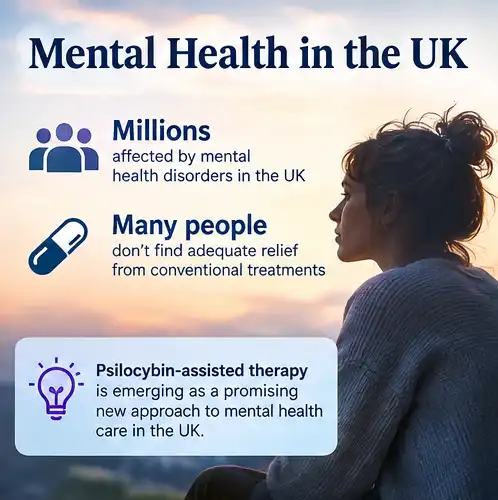
Mental health disorders are among the leading causes of disability in the United Kingdom, affecting millions of people every year. Despite significant advances in psychiatry and psychology, many individuals continue to struggle with conditions such as depression, anxiety, post-traumatic stress disorder (PTSD), obsessive-compulsive disorder (OCD), and addiction. For a considerable number of patients, conventional treatments – including antidepressant medications and psychotherapy – fail to provide adequate relief. This treatment gap has prompted researchers to investigate innovative therapeutic approaches, and one of the most promising developments is psilocybin-assisted therapy.
Psilocybin is a naturally occurring psychedelic compound found in certain species of mushrooms, commonly known as “magic mushrooms.” Over the past decade, scientific interest in psilocybin has grown rapidly, particularly in the United Kingdom, where leading institutions such as King’s College London and Imperial College London have conducted pioneering research into its therapeutic potential. Clinical trials have suggested that psilocybin, when administered in carefully controlled settings alongside professional psychological support, may help individuals experiencing treatment-resistant mental health conditions.
As public awareness increases and research findings continue to emerge, many people are asking whether psilocybin therapy could become part of mainstream healthcare in the UK. This article explores the science behind psilocybin therapy, its potential benefits, current legal status, ongoing research, safety considerations, and what the future may hold for psychedelic-assisted mental health treatment.
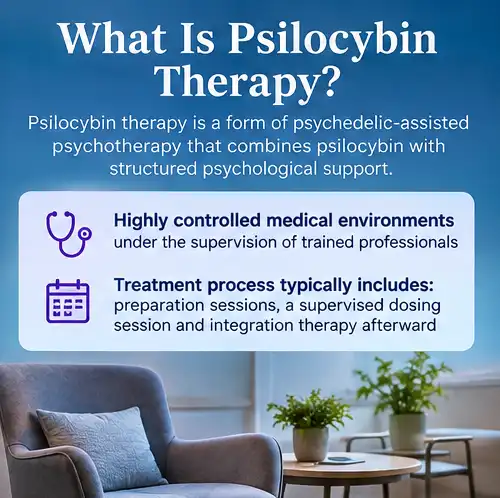
Psilocybin therapy is a form of psychedelic-assisted psychotherapy that combines the administration of psilocybin with structured psychological support. Unlike recreational use, clinical psilocybin therapy occurs in highly controlled medical environments under the supervision of trained healthcare professionals. The treatment process typically includes preparation sessions, a supervised dosing session, and integration therapy afterward.
During the therapeutic session, participants receive a carefully measured dose of psilocybin while remaining in a comfortable environment. The psychedelic experience may last several hours, during which therapists provide support and guidance. Following the session, patients participate in integration discussions designed to help them process insights and apply them to their daily lives.
Researchers believe that psilocybin may temporarily alter patterns of brain activity associated with depression, anxiety, and rigid negative thinking. This disruption may enable patients to view their thoughts, emotions, and experiences from new perspectives, potentially leading to lasting psychological improvements.
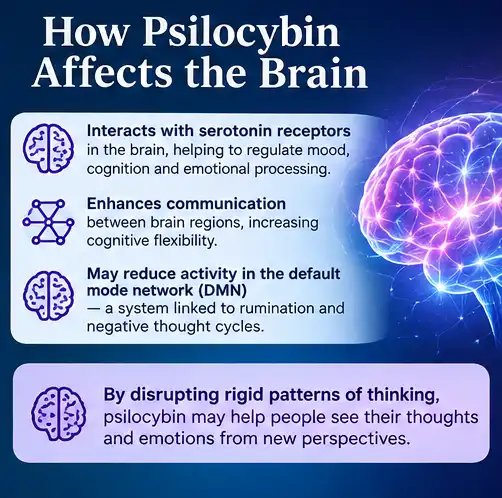
Psilocybin is converted in the body into psilocin, which interacts primarily with serotonin receptors in the brain. Serotonin plays a crucial role in regulating mood, cognition, perception, and emotional processing. Scientists believe that psilocybin enhances communication between brain regions that do not normally interact extensively, resulting in altered states of consciousness and increased cognitive flexibility.
Research suggests that psilocybin may reduce activity in the brain’s default mode network (DMN), a system associated with self-referential thinking and rumination. Excessive activity within the DMN has been linked to depression and anxiety disorders. By temporarily disrupting these patterns, psilocybin may help patients break free from repetitive negative thought cycles.
Many participants in clinical studies report profound emotional experiences, increased self-awareness, enhanced feelings of connection, and significant shifts in perspective. Researchers continue to investigate how these psychological effects contribute to long-term improvements in mental health outcomes.
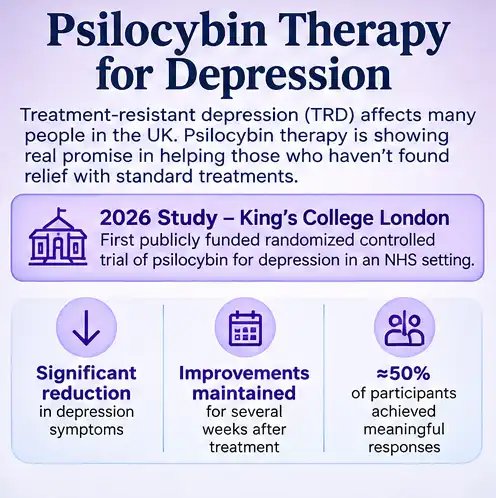
Depression remains one of the most extensively studied applications of psilocybin therapy. Treatment-resistant depression (TRD) affects many individuals who do not respond adequately to antidepressants or psychotherapy. Researchers have focused considerable attention on whether psilocybin can provide relief for this patient population.
In 2026, King’s College London announced promising results from the first publicly funded randomized controlled trial of psilocybin for depression conducted within an NHS setting. The study found that participants receiving a single dose of psilocybin experienced significantly greater reductions in depression symptoms compared to those receiving a placebo. Improvements were maintained for several weeks after treatment. Approximately half of participants receiving psilocybin achieved meaningful treatment responses during the study period.
The Psilocybin in Depression Resistant to Standard Treatments (PsiDeR) study further investigated the safety, feasibility, and effectiveness of psilocybin-assisted therapy for adults whose depression had not responded to multiple previous treatments. Participants received psychological support alongside either psilocybin or placebo, helping researchers evaluate the therapy within a structured clinical framework.
These findings have generated considerable optimism among mental health professionals, although researchers emphasize that larger studies are still necessary before widespread clinical adoption can occur.
Anxiety disorders affect millions of people throughout the UK and often coexist with depression. Emerging research suggests that psilocybin-assisted therapy may help reduce symptoms of generalized anxiety, social anxiety, and existential distress.
Many patients participating in psychedelic therapy studies report lasting reductions in fear, worry, and emotional avoidance. Researchers believe psilocybin may facilitate greater emotional processing and acceptance, allowing individuals to confront difficult experiences more effectively.
Although research remains ongoing, early findings indicate that psychedelic-assisted interventions could offer an alternative therapeutic pathway for individuals who have not benefited from traditional treatments. Further clinical trials are needed to establish efficacy, optimal dosing protocols, and long-term outcomes.
Another area attracting significant scientific interest is the use of psilocybin therapy for addiction and substance use disorders. Addiction often involves deeply ingrained behavioral patterns that can be difficult to change using conventional methods alone.
Researchers at Imperial College London are currently investigating psilocybin’s potential role in treating gambling disorder through the PsiloGambling study. The research examines how psilocybin may influence reward processing, decision-making, and behavioral patterns associated with addictive behaviors.
Additional research has explored whether psilocybin-assisted therapy could support recovery from alcohol dependence, tobacco addiction, opioid use disorders, and other forms of substance misuse. Systematic reviews cited by the UK Parliament suggest growing evidence that psilocybin may have therapeutic potential in addiction treatment when combined with professional psychological support.
While findings remain preliminary, the possibility of addressing addiction through innovative psychedelic-assisted approaches represents an exciting development within modern psychiatry.
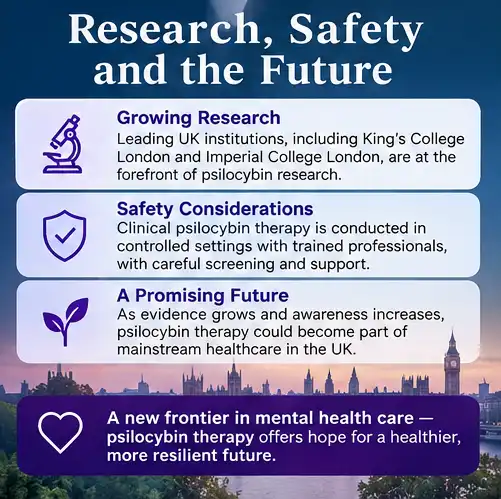
The United Kingdom has become a global leader in psychedelic research. Institutions such as King’s College London, Imperial College London, South London and Maudsley NHS Foundation Trust, and other research organizations are conducting multiple clinical trials evaluating psilocybin-assisted therapy for various mental health conditions.
Current areas of investigation include:
Researchers are also examining optimal therapeutic protocols, therapist training standards, safety procedures, neurobiological mechanisms, and long-term outcomes. Several studies are supported by the National Institute for Health and Care Research (NIHR), reflecting growing interest in understanding whether psychedelic therapies could eventually be integrated into healthcare systems.
One of the most frequently asked questions concerns the legal status of psilocybin therapy in the United Kingdom.
Currently, psilocybin remains a Schedule 1 controlled substance under UK drug legislation. This means it cannot be legally prescribed outside approved research studies and is not licensed as a medical treatment. Government statements have confirmed that there are currently no approved psilocybin-based medicines available through the NHS or private healthcare providers.
However, UK law does permit legitimate scientific and medical research involving psilocybin under strict licensing and regulatory controls. Universities and research institutions conducting clinical trials must obtain appropriate approvals and operate within comprehensive safety frameworks.
The government has indicated that if future evidence demonstrates safety and effectiveness and a manufacturer successfully obtains regulatory approval, the scheduling status of psilocybin could be reviewed.
While psilocybin has shown promising therapeutic potential, it is important to recognize that it is not risk-free. Clinical researchers emphasize that psychedelic therapy should only occur within professionally supervised environments.
Possible short-term effects may include:
Researchers carefully screen participants before enrollment to minimize risks. Individuals with certain psychiatric conditions, medical disorders, or medication interactions may not be eligible for participation. Clinical trials include extensive preparation, monitoring, and follow-up support.
Importantly, experts stress that psychedelic therapy is not a quick fix or miracle cure. Successful outcomes often depend on professional guidance, therapeutic support, and integration of insights gained during treatment.
The possibility of NHS access is a topic of growing public interest. While psilocybin therapy is not currently available as a licensed NHS treatment, recent publicly funded clinical trials have demonstrated encouraging results and helped establish evidence for future evaluations.
Researchers involved in NHS-supported studies have suggested that, if larger confirmatory trials continue to produce positive findings, psilocybin-assisted therapy could eventually be considered for integration into mental health services. However, several important steps remain necessary:
Until these requirements are met, psilocybin therapy will remain primarily within the research setting.
The field of psychedelic medicine is advancing rapidly. International research continues to explore how compounds such as psilocybin, MDMA, and related substances might address some of the most challenging mental health conditions facing society today.
The UK has established itself as a leading center for psychedelic research through collaborations between universities, NHS organizations, clinical researchers, and regulatory authorities. Multiple ongoing studies are examining both the effectiveness and practical implementation of psychedelic-assisted therapies across a range of psychiatric disorders.
Although significant scientific, regulatory, and ethical questions remain, the growing body of evidence suggests that psilocybin therapy could become an important addition to mental healthcare in the future. Continued investment in rigorous research will be essential to determine precisely where these treatments fit within modern medicine.
Psilocybin therapy represents one of the most exciting developments in contemporary mental health research. Early studies conducted by leading UK institutions have demonstrated promising results for treatment-resistant depression and have opened the door to further investigations into anxiety, addiction, PTSD, and other psychiatric conditions. While psilocybin remains illegal outside licensed research settings and has not yet been approved as a medical treatment in the UK, ongoing clinical trials continue to expand scientific understanding of its therapeutic potential.
As research progresses and evidence accumulates, psilocybin-assisted therapy may eventually become a valuable option for individuals who have not found relief through conventional treatments. Until then, it remains a fascinating and rapidly evolving area of medical science that could reshape the future of mental healthcare in the United Kingdom.